
Money in Bali — ATMs, cards, and how to actually pay
Withdrawal limits, the small charges that compound, and the cash habit you'll fall into.
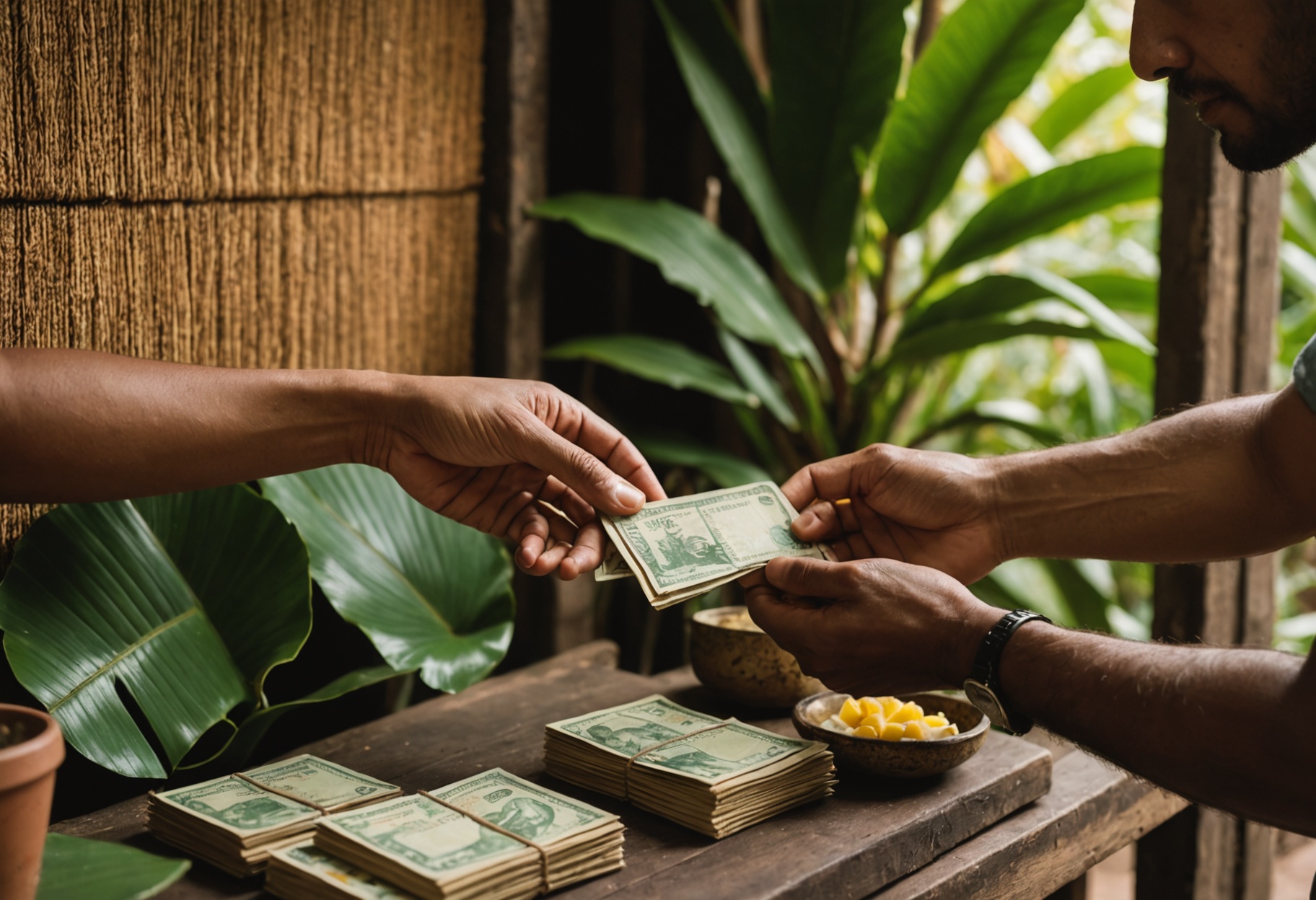
Cash and card both work. Knowing when to use which saves real money.
Bali runs on cash for small purchases and cards for big ones. The rough rule is anything under IDR 200K (roughly USD 12) is paid in cash; anything above splits between cards, QRIS, and cash by venue.
ATMs
Use ATMs at banks during banking hours. The reason isn't safety so much as fraud — the standalone ATMs you find in convenience stores have the highest skimmer rate. Inside-the-bank ATMs are reliably clean.
Withdrawal limits are punishing. Most ATMs cap a single withdrawal at IDR 1.25M or IDR 2.5M. Per-transaction fees from your home bank stack on top — IDR 25–35K per pull plus your bank's foreign fee.
The compounding result: if you're withdrawing IDR 5M of spending money, you'll pay roughly IDR 100K in machine + bank fees. Worth thinking about.
Banks with the highest single-withdrawal cap (IDR 3M+):
- CIMB Niaga — IDR 3M, generally clean, blue and red branding.
- BCA — IDR 2.5–3M depending on terminal, the most common bank, blue.
- Permata Bank — IDR 3M, less common, fewer terminals.
Avoid: standalone ATMs in 24-hour minimarts (Indomaret, Alfamart) for anything large. They work but are a top skimmer target.
Cards
Visa and Mastercard work in most decent restaurants, hotels, and shops. American Express is rare and accepted at maybe one in twenty places.
The card fee dynamics:
- Surcharge. Many places add a 3% card fee at the till. Always ask. If you're paying in cash, "tunai" works.
- Currency conversion. Always pay in IDR (rupiah), never USD. The "dynamic currency conversion" the terminal offers is a 5–8% house edge.
- Chip-and-PIN. Standard. No-PIN tap is common but inconsistent.
The cards we've seen friends actually use without complaint:
- Wise debit card. Real exchange rate, low conversion fee. Best general-purpose.
- Revolut. Similar. Slightly stricter limits on weekends.
- A no-foreign-fee credit card from your home country. Backup for big purchases like flights.
Bring two cards from two different banks. Cards get blocked. The day yours does, the second one is the difference between a calm afternoon and an expensive scramble.
QRIS
QRIS is Indonesia's unified QR code payment system. Locally-issued bank apps and many international wallets (including a recent Wise update) can scan and pay any QRIS code. It's how warungs, drivers, and small operators actually want to be paid.
If you're here long-term, opening a local Permata or BCA account gets you direct QRIS — every coffee shop and warung becomes a phone-tap. Not strictly necessary your first month, but worth doing once you have a KITAS.
Crypto
Some venues accept stablecoins (USDT, USDC). It's niche, off-ramp friction is real, and the convenience is mostly hypothetical for daily life. Most expats who held crypto upon arrival converted it to fiat and stopped using it day-to-day. There's nothing wrong with crypto — there's just nothing it does in Bali that a Wise card doesn't do better.
What things cost
A rough mental model:
- Coffee at a cafe: IDR 30–55K. Specialty cafes IDR 55–80K.
- A meal at a warung: IDR 25–45K. A meal at a Western-facing restaurant: IDR 80–250K.
- A 30-minute scooter ride via Gojek/Grab: IDR 25–60K.
- A 90-minute massage: IDR 150–350K depending on venue.
- A monthly gym pass: IDR 700K–1.4M.
- A weekly cleaner for a two-bedroom villa: IDR 200–300K per visit.
If you're spending more than IDR 25M (roughly USD 1,500) per month for one person and not on a fancy retreat, something is being marked up.
Tipping
Tipping isn't expected the way it is in some countries, but it's welcomed in service-led venues. The usual norms:
- Restaurants: A 10% service charge is often already on the bill — check. If not, IDR 10–20K cash on the table is generous.
- Drivers: Round up to the nearest 5K.
- Massage / spa: IDR 30–50K per hour of service is gracious.
- A cleaner / gardener you see weekly: A small bonus at the end of the month or before holidays. Not strictly tipping — closer to a gesture.
Be consistent. Don't over-tip on day one and then drop off in week three. The relationship is what matters; the amount is mostly a signal.
Where the money goes
Most expats arriving don't spend wildly. Where the money goes silently:
- The card surcharge you stopped noticing.
- ATM fees stacked across many small withdrawals.
- The 5–8% you lose on dynamic currency conversion.
- Daily acai bowls at IDR 80K.
Each of these is small. Together, over a six-month stay, they're a flight home.