

Community & Belonging
Finding Community Without an Algorithm
Ubud is a small town with a small set of rooms. Here is how the rooms find their people.
Community is not assembled. It's recognised — slowly, in real time, between the same faces returning to the same rooms.
You can come to Ubud and feel exquisitely alone in the middle of all of this. Plenty of people do.
The town's reputation is community-rich, and it is. But community here is a practice, not a discovery. It does not arrive in your inbox the day you land. It arrives slowly, in repetition, between the same faces who keep showing up to the same rooms.
This is a guide to those rooms — and to the patience that lets them recognise you.
You will need six weeks. Not because the people are slow but because trust here is bodily, not transactional.
The premise
Most expats who arrive intending to "make friends" leave six months later with three or four they'd trust with a kidney. The reason is the rhythm. Friendship in Ubud is built in cycles — you go to the Tuesday cacao circle, you don't talk to anyone the first time, you go again, you nod the second time, you sit beside someone the third, you walk out together the fourth, you're drinking jamu in their kitchen the eighth. There's no shortcut.
The mistake the first-time arrivals make is treating community like a puzzle to crack. Community here is a frequency you join, not a problem you solve.
The rooms
1. The Tuesday cacao circles
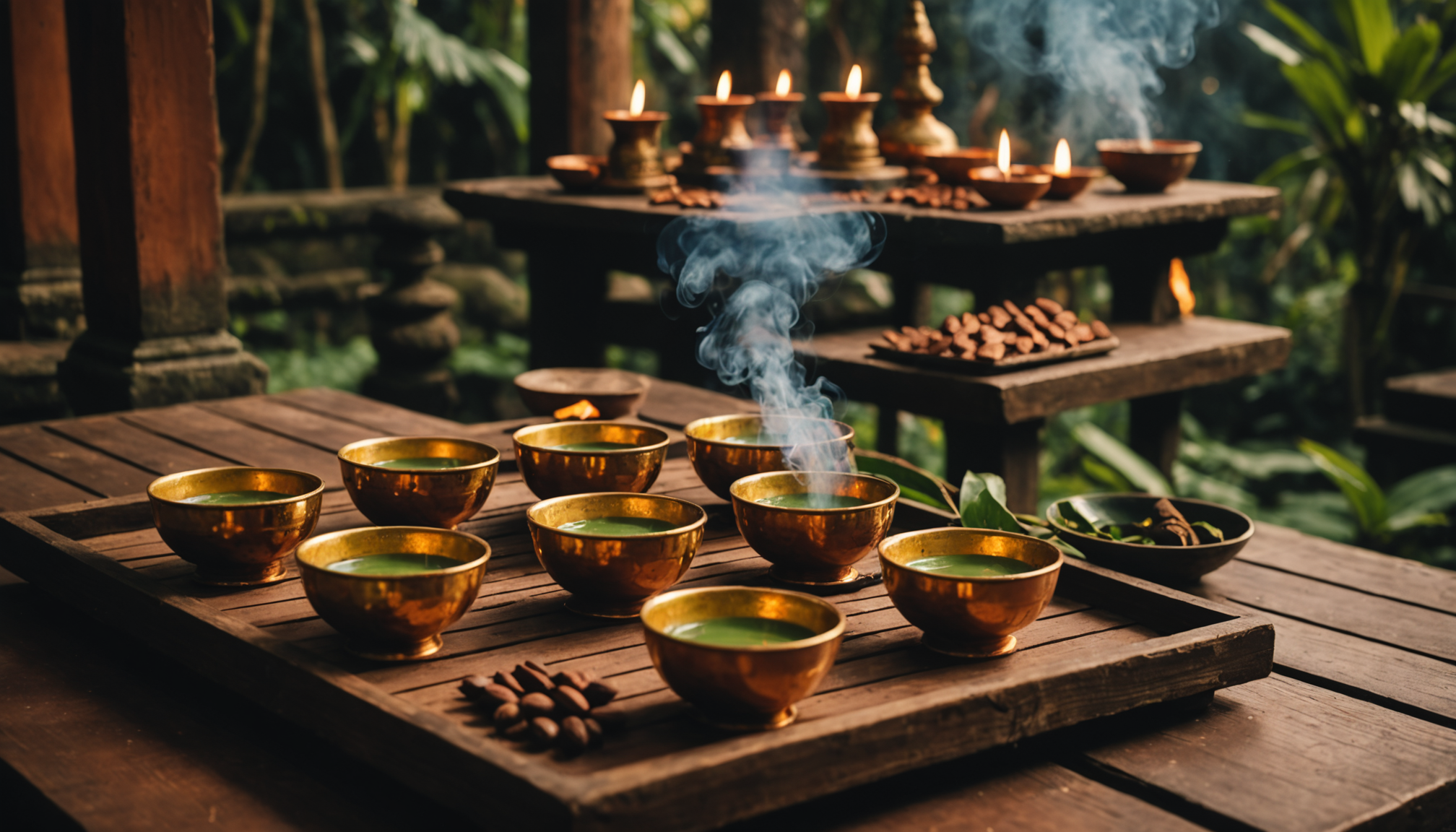
Tea-and-cacao gatherings of 8–25 people, usually held in someone's villa or a quiet pavilion. Often by donation, occasionally an organised payable event. The rhythm is: a soft hour of tea, a held cacao ceremony, a closing share. Quiet, slow, deeply attentive.
Look for Songs of the Dragonfly: A Community Devotional Gathering — the lineage of devotional community gatherings here.
2. Dance — Tuesday and Friday at Paradiso Ubud, Sunday morning at Yoga Barn
Ecstatic dance. A pulsing room of 80–200 people moving wordlessly for ninety minutes. The bodies do the introduction work. Don't come scanning. Come for yourself, and let the room do its thing.
The recurring weekly anchors are the easiest: 5Rhythms with Sophie.
3. The kirtan and bhajan nights
Devotional singing — sometimes Hindu, sometimes ecumenical, sometimes folk. Smaller rooms than dance, slower, more vulnerable. The people who go regularly are some of the loveliest in town.
4. The food gathering — long tables, slow dinners
The trick to meeting people through food is: don't go to a restaurant, go to a long-table evening. Yellow Flower Café's Wednesday open table. The Sunday brunches that pop up in Penestanan villas. The night-market stalls in Sayan where the same five expats are always on the bench out front.
5. The micro-community of your work
If you're working from home, find one café and become a regular. Two days a week. Three months. The barista will know your order, then your name, then your story, and that's the entry into the broader scene. The names that recur for this: Anomali, Hujan Locale on slow afternoons, Watercress on Goutama.
6. The retreat
The fully-curated path.
Retreat
7 Days of Embodied Awakening
A week of cacao, sound, dance, and the practitioners who hold space without flinching.
View retreatis a structured invitation to do the work alongside a small group — and the people you meet inside a retreat container often become the closest connections you make all year.
The patience problem
The first six weeks here will feel uneven. Two great rooms then a flat one. Three lovely conversations then a week of nothing. This is not failure. This is the courtship.
The people you're looking for are testing you the way you're testing them. They've seen a hundred people arrive with a six-month plan and leave after seven weeks. They wait until you keep showing up.
Show up. The third Tuesday. The fourth Friday. The conversation that's been hovering near you for a month happens in week six.
A few things people get wrong
- They mistake intensity for intimacy. A four-hour conversation on the dance floor with someone you've never met is not the same thing as friendship. It's a beautiful encounter. Treat it as such.
- They scene-hop. The temptation to try a different room every night is real. The opposite is the actual move: pick three rooms and become a fixture.
- They project the rules of their old city. The rules here are different. The pace is different. The flirtation is different. The grief is different. None of the imported maps quite work.
- They forget that everyone here is doing their own work. That woman not making eye contact is in her own week. Don't take it personally. Try again next time.
Where stories of community live
A path
If you have just arrived and you want community without grinding it out:
- One dance per week. Tuesday or Friday. Stay for the full ninety minutes. Don't skip the closing share.
- One slower ceremony per week. Cacao, kirtan, sound. Anything that asks you to sit still and listen.
- One regular café. Two mornings a week. Same time. Same table. Don't move.
- One physical practice you're committed to. Yoga, breathwork, a daily walk. A body cared for is much more legible to the room.
Six weeks of that. You won't need to find your community. They'll have started recognising you.
The Ubudian rule: you're not strangers, you're early.
Mentioned in this guide
Where to go from here

Event
Songs of the Dragonfly: A Community Devotional Gathering
Join an evening of medicine songs circle, shared prayer, and collective voice to co-create prayer through song.
Retreat
7 Days of Embodied Awakening
A week of cacao, sound, dance, and the practitioners who hold space without flinching.

Event
5Rhythms with Sophie
Friday morning 5Rhythms with Sophie. Drop-in welcome.
Place
Paradiso Ubud
The community dance studio — ecstatic dance, contact improv, 5Rhythms, plant-based kitchen downstairs.
Place
Yellow Flower Café
Penestanan ridge café — long-running, plant-forward, the kind of place you write in.
Continue
Read next

Romance & Intimacy
Falling in Love in Ubud
The Eat-Pray-Love fantasy, honestly. What it actually takes — and what it actually costs — to find something real here.
Spirit & Practice
Meeting Your Spiritual Teacher
Ubud is full of teachers. Most of them are good. Some of them are great. A handful are world-class. The work is learning to tell the difference.