Living Beautifully
Living Beautifully on a Budget
The long-stay arithmetic. Spaciousness, food, time, slowness — without spending the home-country salary you came here to escape.
The point was never the cheapness. The point was the time the cheapness bought you.
You can spend USD 4,000 a month here and never feel rich, or USD 1,500 a month and feel lavish. The difference is almost entirely shape, not amount.
Most people who come to Ubud for "an affordable life" make the mistake of importing their old spending shape and just compressing the numbers. The villas, restaurants, and gym memberships look cheap by Western standards, so they buy them all. The cheapness disappears.
The other path is rarer and quieter — and it's the one this town is actually built for. You stop trying to live like an expat and start living like someone with time.
A morning in Ubud spent unhurried at a single warung is worth more than a fully-booked day. Your old life sold you the day. This place sells you the morning.
What "beautifully" means here
Not luxurious. Not Instagrammable. Beautifully, in this town, means: rested, with time, in a body that has been moved and fed well, in a space that is uncluttered, surrounded by people who are also doing their work.
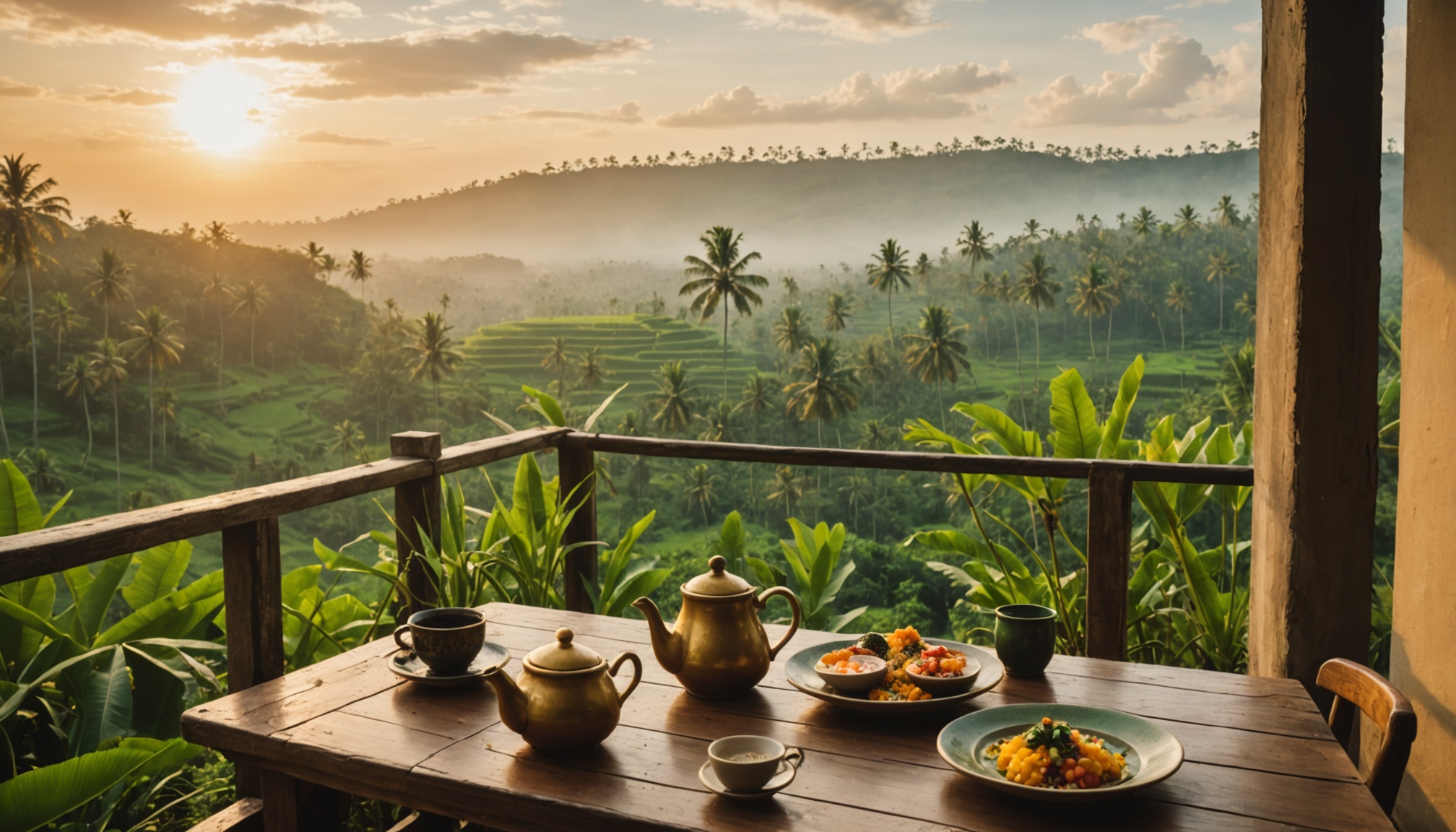
The arithmetic works because the things that make a day beautiful here are not expensive. A villa with morning light. A 90-minute massage. A long lunch at a warung in Pengosekan. An afternoon ride to a waterfall. None of these costs more than the equivalent of a city centre lunch in your old life.
What costs is mistaking Ubud for a vacation and spending vacation-money for six months.
The shape that works
Most happy long-stay expats here organise their spend roughly as:
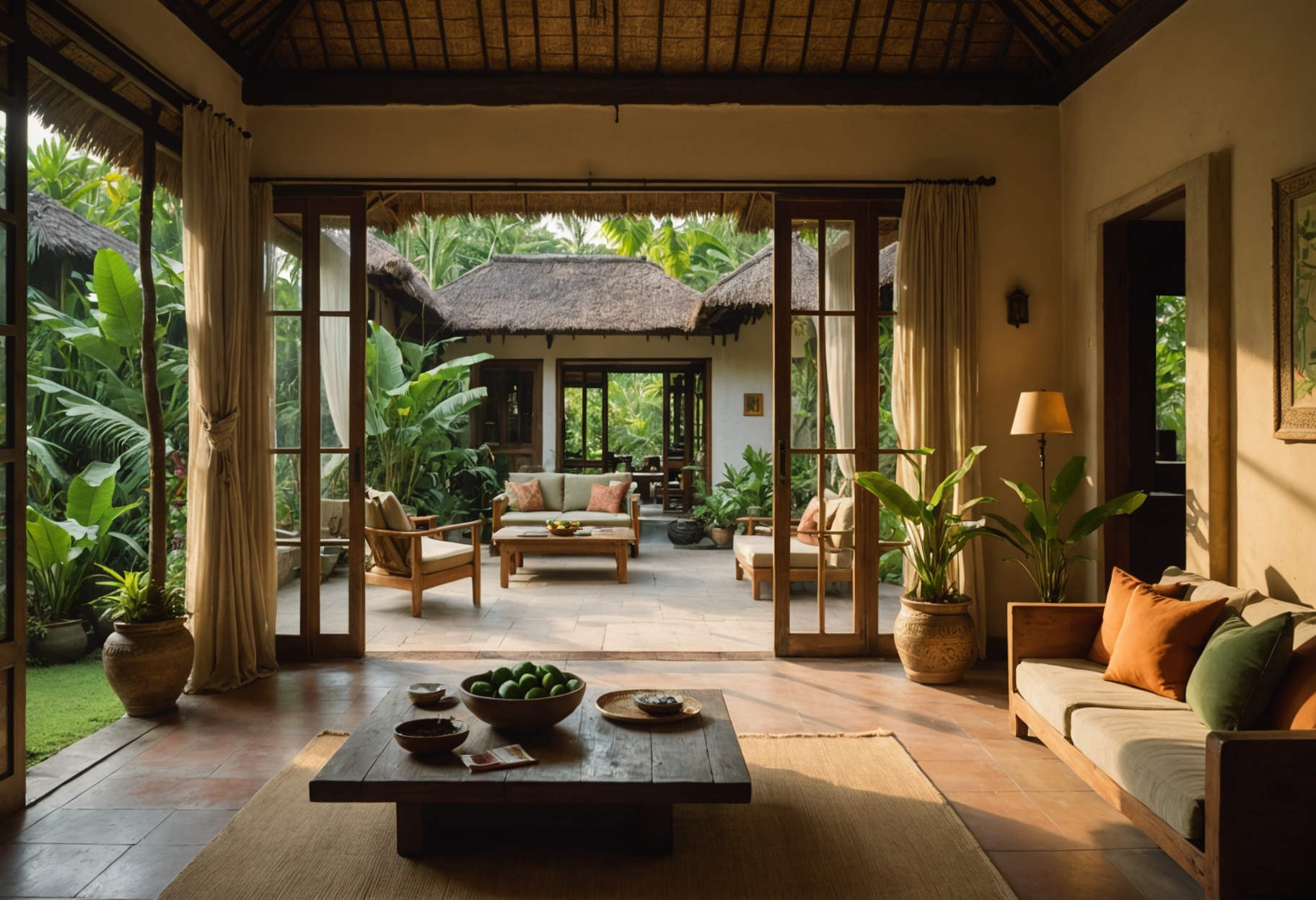
- Roughly 35–45% on housing. A villa or kost that you're happy to be in for several hours a day is the highest-leverage purchase. Cheap living that you escape from to expensive cafes ends up more expensive than a slightly nicer place.
- Roughly 25–30% on food. Half home-cooked from local markets and Sayan or Ubud farmers' market produce; half eaten out at a mix of warungs (cheap) and one or two thoughtful Western-facing places (more).
- Roughly 10% on practice. Yoga membership, weekly massage or bodywork, occasional ceremony. The maintenance of the body that earns you the time.
- The rest on what changes by week — friends' birthdays, an unexpected workshop, a flight, a new pair of slow-made sandals from a Bali artisan.
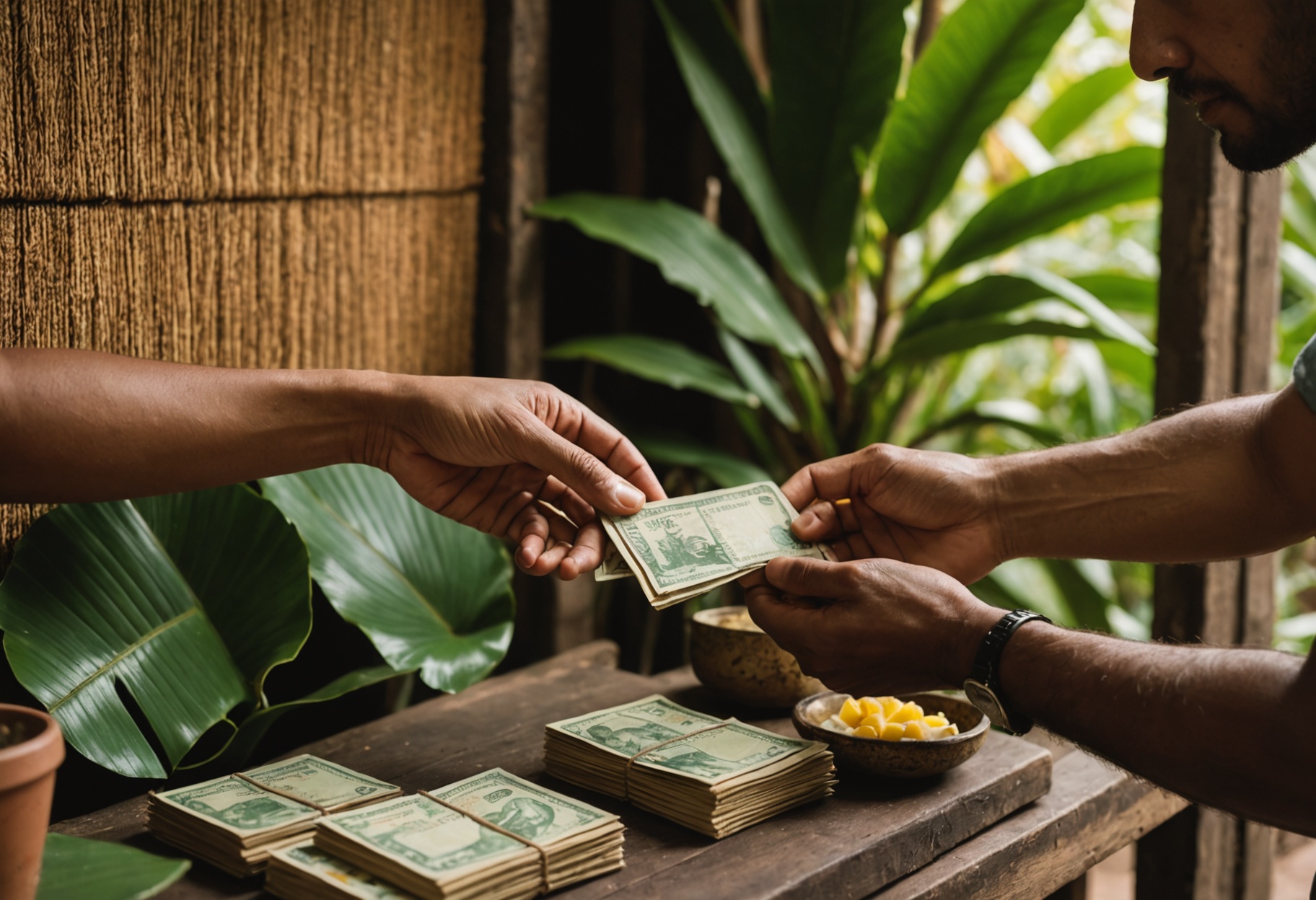
The exception that breaks people: vehicles, alcohol, and shipping. A second-hand scooter (IDR 12–18M, sells for 80% on departure) is the right move. Any drinking habit that involves Bintangs north of three a night will quietly outpace your rent. Buying things online from outside Indonesia and shipping them in is almost always more expensive than the equivalent purchase in town.
Where to source
The food economy here rewards repetition. The same fruit-and-veg vendor week after week becomes "your" person. Prices drop. Quality improves. You get the back-of-the-stall produce. This is true of most things — the small repeated relationship is more economical than chasing the cheapest item.
- Sayan farmers' market, Saturday mornings. Organic produce direct from growers. Plan your week around it.
- Pasar Ubud (the local market) — early mornings. Tropical produce at locals' prices. Bring exact change. Bring a small tote.
- Penestanan butcher / fish vendor (the one on the corner with the white tiles). Cheaper and fresher than supermarket.
- The supermarkets (Bintang, Coco, Pepito) are convenient but priced for tourists. Use them for imported goods (oat milk, decent coffee for home, soap) — not staples.
- Warungs. A nasi campur is IDR 25–35K. The same plate at a Western-facing place is IDR 80–120K. The warung version is also probably more delicious.
What time looks like when you have it
The thing nobody mentions in the housing-and-food calculation: time is the actual product Ubud sells. The reason a USD 1,500/month life here feels so different from a USD 4,000/month life back home is not the money. It's that the money buys back hours. Cleaning is two hours of your week, not eight. Cooking is exactly as much as you want it to be. Commuting is a fifteen-minute scooter ride.
What you do with those hours is the actual question.
The expat lives that grow stale here are the ones that filled the hours back up — endless workshops, endless reading, the forty-fifth modality. The lives that hold are the ones that let the hours stay open, mostly. A long walk. A stretch on the porch. The book you're only half through. The conversation that lasted three hours over one cup of tea.
This is what beauty is here: room.
Three small daily luxuries
The cheap luxuries that compound:
- A weekly massage. IDR 150–200K. The single most leverage you can give your body for the money.
- A flowers vendor on the corner. IDR 15K of stems on the table on a Tuesday. The room becomes a different room.
- Coffee at the same cafe, alone, in the morning. Becomes a relationship. Becomes the structural ground of your day.
The expensive luxuries you'll be tempted by — the Bali-luxe sound bath, the IDR 600K facial, the eight-course tasting menu — are mostly fine. None of them is the thing that makes a year here feel beautiful.
Stories of people who built this
A path
If you're here on a six-month run and want it to feel like the slow, beautiful version:
- Pick a villa for its morning light, not its pool. Visit at 7am.
- Find one warung you'll eat at twice a week.
- Open a Permata or BCA account once you have a KITAS. QRIS at every coffee shop is the small luxury of integration.
- Befriend two people who've been here longer than two years. They're the ones whose lives you'll want to learn from.
- Don't book the third week of every month. Leave one week open. Let the place suggest itself.
What you came here to escape was the shape, not the salary. Don't rebuild the shape.
Continue