
Local Culture, Honestly
Local Culture, Honestly
Beyond the cliché. Into the relationships that actually carry the place.
You did not come here to consume Bali. You came here to be slowly, mutually changed by it.
The version of Balinese culture sold to most arrivals is a polite fiction — the temple visit, the offering-making class, the dance performance. None of it is wrong. None of it is enough.
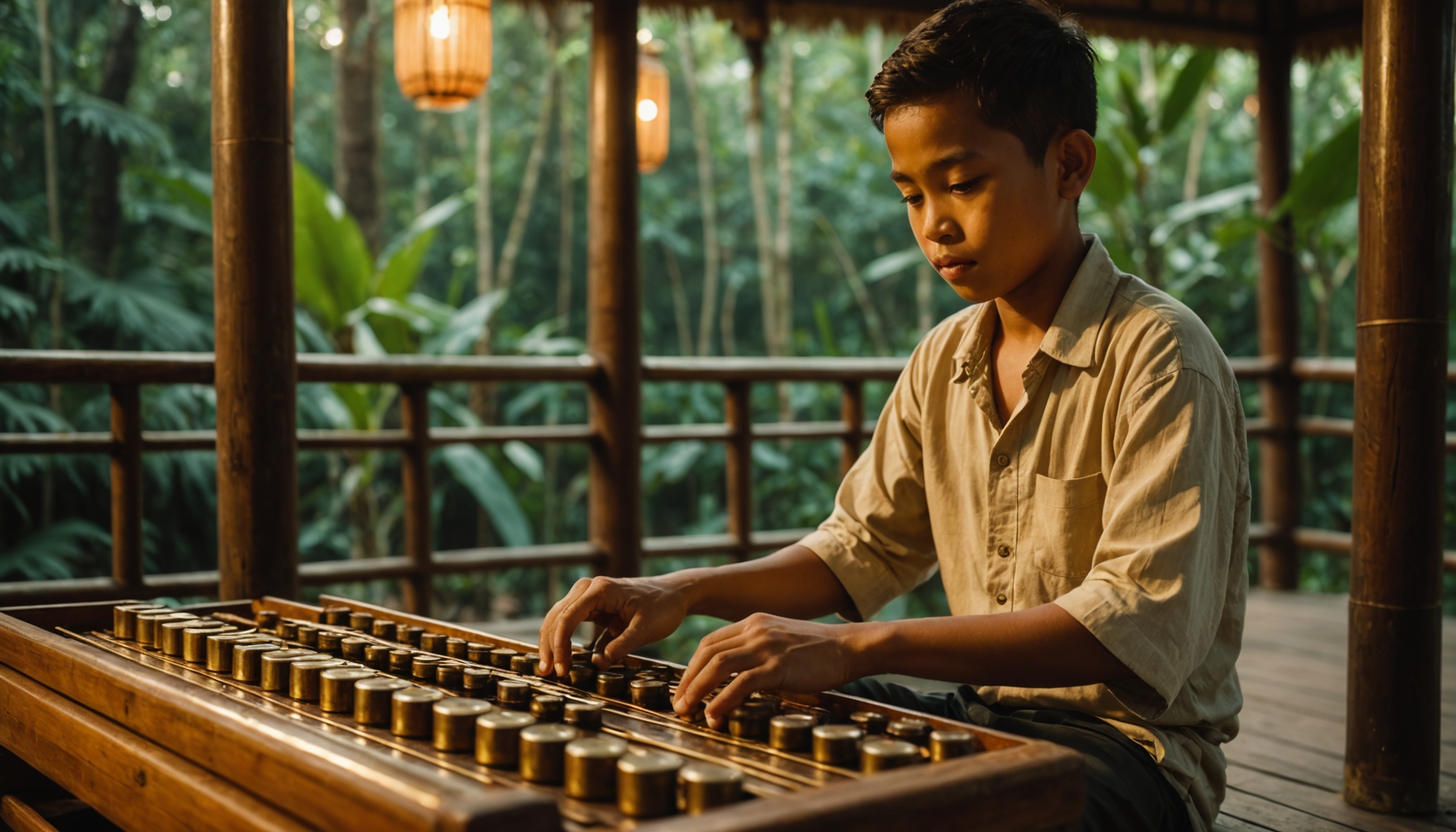
Most of what passes for "local culture" here is a managed performance for an audience that was always going to leave. The temple visit is real, but it's also been adapted for the bus tour. The offering-making class is real, but it teaches you to make canang sari without ever asking you to know whose family it's for. There is nothing wrong with these gateways. They are gateways. They are not the place.
The actual culture — the one that's held the island for a thousand years and that holds it still — is closed to almost everyone, and it's closed for good reasons. It's closed because outsiders have, with the best intentions, repeatedly damaged it.
This is a guide to what an honest relationship to Balinese culture actually looks like — slow, deferential, mutual, and almost certainly different from what you imagined.
You will not "experience" Balinese culture. If you're lucky and patient, Balinese people will let you near it.
What you're actually moving inside
Bali's culture is not a single thing. It's a layered system of: village (banjar) obligation, temple cycles, family lineages, caste subtleties, agricultural calendars, and a near-daily devotional practice that touches every household. None of these layers were designed for outsiders. All of them have been gracious to outsiders for a long time. The graciousness is a gift. It is not a permission.
The cycles are continuous. There's a temple ceremony somewhere on the island most days. The frangipani offerings on the gate of your villa are placed by someone for whom that act is a real-time prayer, not a decoration. The procession that blocks your scooter on a Tuesday is a real event with a real meaning, and the right response is to wait without resentment.
The ways in (in order of welcome)
1. The casual temple visit, done right
Go to a real temple on a non-festival day. Wear a sarong (loaned at the gate or owned by you, IDR 100–200K from a market). Don't photograph people without explicit permission. Don't walk in front of someone praying. Sit at the back. Stay twenty minutes. Leave.
The local temples that warmly welcome respectful visitors at quiet times are widely known — Pura Saraswati in central Ubud, Gunung Lebah at the river, Pura Dalem just north. The point is the regularity, not the spectacle. Going once is sightseeing. Going monthly, alone, in silence, is something else.
2. Buying from the same makers, repeatedly
The craft economy here is structured as small workshops attached to families. The mask carver in Mas. The silversmith in Celuk. The natural-dye weaver in Sidemen. Going once is a transaction. Going three times, asking after the family by name, learning what the new work is — that's the entry into a small relationship that, over years, becomes real.
3. The shared meal, over months
Most of the deep cultural learning available to expats happens slowly through one or two Balinese friendships, built over months of unhurried meals. The friendships are usually with someone roughly your age who is also moving between worlds — someone who runs a warung, manages a homestay, teaches yoga, drives for a living, makes art. The friendship can't be sought. It can be received, when it's offered, with care.
Don't mistake your villa staff for friends. The relationship there is real but it's structured. A staff member's day off is theirs, not an invitation to widen the relationship into your social life. Pay well, learn names, ask about families, accept that the relationship is professional and warm but not friendship. The actual friendships will come from elsewhere.
4. Attending an actual ceremony as a guest
There are local rooms and gatherings that genuinely welcome respectful outsiders.
is one such gathering, taught by a Balinese practitioner who actually wants to share rather than perform. Approach it as participation in real practice, not a class.
If you're ever invited to a wedding, cremation, or tooth-filing — go, dress correctly (ask), bring a thoughtful gift (a beautifully-wrapped envelope of cash, modest by your standards, generous by local), don't take photos unless invited, eat what's served, leave when guests start to leave.
What to avoid
- The "culture experience" packages. A two-hour "be a Balinese for a day" workshop is fine for what it is. It is not culture. It's souvenir.
- Buying ceremonial objects as decoration. The hand-painted mask, the small temple statue, the ceremonial daggers — they are made to be part of a practice. Buying them as wall art is a small disrespect that compounds over a town.
- The Instagrammable temple shoot. The temple is not a photo studio. The Balinese woman in traditional dress posing for tourists is being paid by an organiser who is depleting the meaning of what she's wearing.
- "Volunteering" with NGOs. Almost all "voluntourism" projects in Bali are net-extractive, and the few good organisations don't need short-term help. Donate money to vetted local programmes if you want to help. Don't insert yourself.
Language
Learn five Indonesian phrases. Use them daily.
- "Selamat pagi / siang / sore / malam." Good morning / midday / afternoon / evening.
- "Terima kasih." Thank you.
- "Permisi." Excuse me / sorry.
- "Sama-sama." You're welcome.
- "Apa kabar?" How are you?
Learn one Balinese phrase. Just one. Use it once a week with someone Balinese. The micro-shift in their face is the door opening.
A path
If you want to deepen — slowly, honestly, over a year:
- Go to one temple per week, alone, in silence. Choose three that suit your route. Rotate.
- Find one Balinese maker whose work moves you. Buy from them three times this year. Bring them gifts when you visit. Learn their family's name.
- Take a single Balinese-cooking class with a teacher who isn't catering to tourists — usually held in their family compound, usually small, usually IDR 350–600K. Eat with the family at the end. You will learn more about the place in three hours than in a hundred restaurant meals.
- Read what Balinese people have written about Bali. Not the foreign-written travel books. There is a small, growing body of Balinese-authored writing in English worth seeking out.
The work of being honest about a culture you didn't grow up inside is mostly about being content with peripheral. Stay peripheral with curiosity and care. The deep middle isn't for you, and that's the right answer.
The most respectful thing a foreigner can do here is to learn the cycles, stay outside the centre, and be quietly, dependably present at the edge.
Mentioned in this guide
Where to go from here
Continue
Read next
Community & Belonging
Finding Community Without an Algorithm
Ubud is a small town with a small set of rooms. Here is how the rooms find their people.
Spirit & Practice
Meeting Your Spiritual Teacher
Ubud is full of teachers. Most of them are good. Some of them are great. A handful are world-class. The work is learning to tell the difference.